Transcript
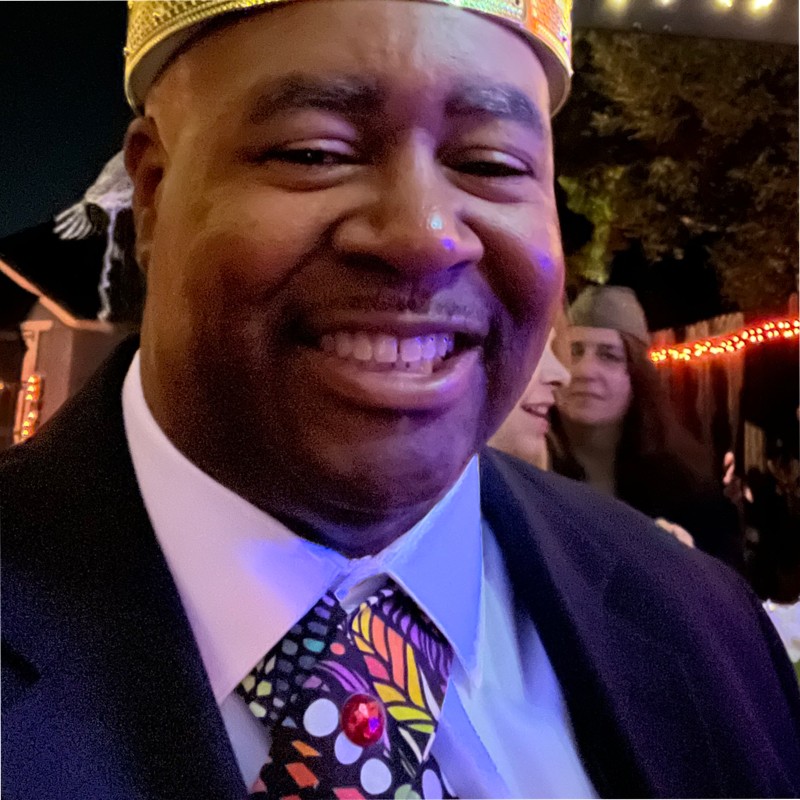
Jordan Mendoza (00:01.685)Hello everyone and welcome to the Blaze Your Own Trail podcast. My name is Jordan Mendoza. I'm your host and I've got an incredible guest today. His name is Ronald Bolden Jr. and I'm going to have him tell you a little bit about who he is and what he does today.Ronald Bolden Jr (00:18.03)Thank you Jordan, I appreciate it. Hello everyone, my name is Ronald Bolden Jr. and I am the founder of Shy Marketing. Shy Marketing is birthed after 30 years of me being in technology. 30 plus years ago, as they say dating yourself, I was an internet, cloud and AI evangelist. I learned a long time ago that I didn't think cold calling made any sense. I learned a long time ago that I didn't want to have just cold conversations.And so I created a strategy where I didn't have to cold call. When I leveraged my background, which was one of being reserved or shy, I realized that if I took the combination of my ears, which were more active listening, and combined that with what I do as a business owner, I could create this world where I can create a win-win relationships. And what I've told people is that shy marketing is designed to have conversations.that lead to sales versus you having a sales conversation. Shire Marketing is designed to help business owners kind of break through the pain of sales and just have conversations. And then Shire Marketing is designed to help people combine technology, combine with partnerships to help people get to revenue faster. And so I feel fortunate to be here, but I also know that all conversations can lead somewhere.Jordan Mendoza (01:41.258)youRonald Bolden Jr (01:44.202)if you're willing to listen to what somebody wants. And that's what Shy Mark is all about.Jordan Mendoza (01:50.261)That's great. Yeah, appreciate you sharing that. And I cannot wait to give folks some more insight into shy marketing as we move along the show. But as you know, Ronald, being a listener of the show yourself, my favorite part of the show is always taking a rewind and getting deep context into my guests story and their journey. So if you can share for the audience, you know, where were you born and raised? And what kind of kid were you? What would you get into? Were you more into the academic side of things? Were you into sports? I love just to find out aboutthe early days of Ronald.Ronald Bolden Jr (02:22.284)No, appreciate the question. So yeah, I was born in a city called, born in Oakland, California, but raised in a city called Richmond, California. My parents who both met at a college called Southern University in Louisiana, they were both Louisiana kids per se. They met in college and then they decided to sort of transition here to Northern California. They were both in education.My mother was an elementary school teacher. My dad saw gaps in the Oakland Unified School District where kids that were falling through the cracks were not making it. And so he was the first to start continuation schools to help the kids falling through the cracks be able to kind of find their way and actually then move on to like a career. And so what he did for me is he put me in front of people to speak about what's it like.to be a young kid growing up in our urban community and how no matter what's in front of you, how you can make things happen. I was a pretty active kid. I was a person that my parents and I always used to run everywhere. Run in houses, got in trouble, know, run outside, run, run, run, run, run. And I was also told that when I spoke, I had a a booming voice. Let's just say that.I remember in the fifth grade I got kicked out of my Lutheran school that I went to because they said I was too loud on the playground. I had straight A's and I was actually taking fifth grade work in the third grade. Me and two other students. I was crushing school, but I guess I wasn't crushing the social behaviors of what was going on. And I learned early on that you can crush it when it comes to academics or how you're engaged, but people still may treat you a little differently. And so...my life sort of morphed behind that. So when two educator families, two educators as your parents, you kind of have a different perspective because you're around a lot of kids. As I got to high school, I was a student athlete, you know, I was a popular person, but I realized that I didn't really feel comfortable communicating with someone unless they communicated with me. Now, me and the buddies were fine, but girls? I wasn't saying a word to them. And I learned that IRonald Bolden Jr (04:41.198)would just get very uncomfortable. That continued, even though was a popular athlete, it continued until I got to college. And I decided after about two and a half years to switch to engineering, and I had done one year of engineering, but I lost my internship. And when I lost my internship the second year, I didn't know what I was gonna do. A guy walked up to me and said, hey, you look like a sharp guy. Would you be open to an opportunity? And I remember how I felt.I remember the engineers I met my first summer, how they were struggling communicating, how they struggled with how they would just put their thoughts together, how they were very reserved. And I saw myself heading in that same direction. So I said, let me go ahead and see what you're talking about. Turns out it was a door-to-door sales job. Now, when I told my dad this, he was like, son, you need to come home and get another engineering job. I was like, no, dad.I'm going to do this. I think this is the best way to go. We kind of had a back and forth, but I refused to budge. And so he said, well, do what you got to do with your life. When I went out to this program, it was in Nashville, Tennessee, it was to sell educational books. And the main trainer for the whole program was the one and only Zig Ziglar. And if people know that name,to have FaceTime with him was incredible. But I didn't even realize it because I wasn't in the world of sales. I was the only engineer out of 5,000 first-time salespeople that was in this program. And the first year, I finished number 55 doing this door-to-door sales job. We learned how to zigzag, how to present, how you communicate, how you give somebody what they want, and then they give you what you want. Learned that whole philosophy. And when he heard about me, when I got a chance to go to one of the special sessions, he was like,Are you the engineer that was working in Milwaukee, Wisconsin? I was like, yeah. He said, we never had anybody do really well in Milwaukee. Tell me what you did. And I would talk about how I communicated, how I spoke. And he said, being a shy person, because I told him I was, pretty shy guy, your ears are tuned differently. You will hear people say things that other people won't hear because your ears are more active. He said, embrace that. Don't run away from that.Ronald Bolden Jr (06:53.528)And was the first one to make me feel like being shy was not a deficit, but could be like a superpower. I did it two more summers. And I always go back and say, those three summers of daughter-in-law sales was better than any three years of me being an engineering intern. Because I dealt with people in different parts of the country, different parts of the country.Milwaukee, Wisconsin the first summer, Gainesville, Florida my second summer, Houston, Texas my third summer. I learned how to deal with people at all shapes and sizes and types. And it morphed me so that when I got engineering jobs, I would walk in and I would be able to sell myself, but it changed my life. But I also realized when I got into corporate, I did not let Coke call it. I realized it wasIt was just petrified. And all my old feelings came back. But I realized if I just started having conversations with people, I would normally connect with them pretty fast. And so I said, well, let me go back to what Mr. Ziegzickler said. You give people what they want, and you'll get what you want. And so I'd always ask the question, how can I help you? I know that you're here to talk to me about what you can do to help me, but how can I help you? What is a goal?that you need to accomplish the first quarter for you to be in a good place. And that approach endeared me to a lot of folks. They were like, no one ever asked me that. They always want to know what I can do for them. I said, I understand. I want to know what you want so I can help you. And maybe if you feel like I've provided you great service, you'll provide me with something I want. And that morphed a relationship for years and changed how I can engage with people for years.Jordan Mendoza (08:39.871)Yeah.Jordan Mendoza (08:44.17)That's great. Yeah. Yeah. Well, I mean, there's definitely a lot to unpack there. have parents that are educators, right? So you got the privilege to be in around lots of people from all different walks of life, which has definitely served you well, it sounds like, for your career. And being popular in school, being in... So what sports did you play? Let's kind of rewind a little bit.Ronald Bolden Jr (08:46.114)to come.Jordan Mendoza (09:12.118)You mentioned your student athlete. So did you play more than one sport? Was there a sport in particular that you like the best? I'd love just to find out about that. And then what I'd love to find out is playing sports is something I've done my whole life. Less organized, more street ball, street sports, that type of thing. But I know what I've gained from doing that. Like how much value that's added to me by being an athlete.for a really long time. So I'd love to find out some lessons that you learned being an athlete, and then maybe a coach or a mentor that you think helped shape or mold you during that time.Ronald Bolden Jr (09:54.478)Yeah, I appreciate that. So the sport I grew up loving the most actually was baseball. I love playing baseball, but I loved watching football. And it's because I grew up as an Oakland Raiders fan, as you might see the banner behind me. My dad was a season ticket holder. My mom was a season ticket holder. My uncle, my dad's brother was a season ticket holder. But my mom, you know, rest in peace, was late to everything. So my dad, he would drive him crazy waiting for her.to go to the game, because he wanted to tailgate and do all that. So he said, why don't you let me take Ronnie, that was what they called me the family, Ronnie, let me take Ronnie to the game, since he'll be able to make it. And she was like, OK, no problem. And I became an Oakland Raiders fan. But I was the kid that would watch the play and call them out as a little kid, and everybody looked at me like I was crazy. They're like, how do you know that play, little Ronnie? I said, I can see it, because you'll see the formations. And I just was.one of those sort of football junkies. I can remember every player's name and everything else, so I loved the game, but I didn't play it. I played Little League Baseball. It was Jackie Robinson League where I met some of my best friends to this day and more from there. So my sort of dual love was love playing baseball, like watching football. I did that all the way up until I got to high school. And one of the things I also knew that I was blind as a bat.And something about baseball, when you can't see, it's kind of hard to play it. So I decided after my glasses and just I said, let me go ahead and try out for football because I was a big guy. I've always been a big guy for my age. And I played football. And it wasn't until when I was playing or trying out, I remember a guy was kind of pushing me around. It was much smaller than me. And one of my friends said, why you let a guy push you around?Jordan Mendoza (11:21.984)Absolutely.Ronald Bolden Jr (11:43.308)It's because I didn't have the aggressive gene that you have in football in me. But then he decided to say something crazy to me and something clicked. It was like, what did you say? He said, yeah, man, I knew you were soft as a big guy. And it triggered a whole different mindset. And then I became this aggressive football player. And I played four years and our team won North Coast championships. We did really well. But football was the game that I loved to play, but baseball was my real love.So I grew up as a dual athlete. When I had sons, I said, well, I didn't push them. But my mindset was I wanted to be a participant. And I've learned a long time ago, if you're supportive, you can do a lot of great things. And when you talk about coaches, my dad coached me in baseball up until I stopped playing. So I watched him and how he treated every kid.because of his education background, because he was one of these administrators working with bunch of kids that were at risk. And I saw a lot from him. So I would say my father was a great coach. He'd work with some kids with broken homes. He gave them hope, saying that, look, you need to get your education because not very small people make it to the pros. And he was all about that. So I would look at him as the coach that really made a difference for me. But there was one coach.He actually was a professional AFNI. His name was Mike Felder. He actually played for the Milwaukee Brewers and the Giants. He was from the same city of Richmond, California, where I was from. And we had a lot of great athletes who came from this city. He was a great, great influence in terms of just the attitude it takes to be a successful student athlete, the attitude it takes just to be successful in sports. So I would probably call him out as the one person who really changed my mindset.Because I say if a professional athlete can find time to give back to kids, what's my excuse?Jordan Mendoza (13:38.27)Yeah, that's great. And what would you say is maybe the biggest lesson that you learned playing baseball or football that applies to business today and how you operate things?Ronald Bolden Jr (13:51.65)that teams get things done much faster than an individual. You need to surround yourself with people who can take a little piece of the overall goal and let them crush it. That's why to me in baseball, you can be a dominant pitcher, but if your catcher is not any good, it doesn't matter, right? In football, is not, all the positions rely on each other.You can't just go out there and dominate by yourself. You can't throw a pass to yourself. You can't run without any blocking. All of them require everyone doing their job, as Bill Belichick would say. So that, to me, is what I learned, is that you are better in a strength of a team than you are by yourself, operating by yourself. That's why Partnerships has been a part of my company since day one. Partnerships, you know, where both sidesI like to use the analogy of the Avengers. We're like the Avengers. I can never do a podcast like Jordan. So what do I do? Everyone who's thinking about doing a podcast, you need to talk to Jordan. Because Jordan's going to help you get out of you what's been in you forever. That's edifying Jordan. Because Jordan's good at what he does. And that to me is what's been the lifeblood of my life and business is partnerships.Jordan Mendoza (15:19.176)Love it. Love it. And well, first I want to say very incredible that you got to learn from, you know, the late Zig Ziglar, you know, one of the most brilliant minds in psychology and sales and communication and building relationships. And the fact that you got to do that for three summers, I know that's worth its weight in gold. You can't really put a price tag on that.In fact, my first job was for the Oregonian newspaper going door to door at 14 years old. You know, we saw an ad in the paper and it said, Hey, go knock on doors and get free Burger King. were like, we're in, we're signing up for this thing. Got paid, got paid. Yeah, that's some motivation. got, we got a free Whopper fries and a milkshake and we got dropped off into apartment communities and neighborhoods andRonald Bolden Jr (16:01.934)The things that motivate us, right? King. Yeah.Ronald Bolden Jr (16:11.052)Yeah.Jordan Mendoza (16:14.76)Man, you you learn a lot about yourself when you knock on doors because you don't know who's on the other side. You don't know if they're grumpy. You don't know if they're happy. You don't know if they're crazy. You don't know if you woke up their baby or if they've got a dog or a weapon. I mean, there is so much uncertainty when you knock on a door. You literally don't know what's on the other side. But here's the thing. And I know this is something that you learn.Ronald Bolden Jr (16:24.462)Yep. Yep. Absolutely. Absolutely. Yeah. Yeah. Yeah. Yeah.Jordan Mendoza (16:43.098)Every no it gets you one step closer to a yes and it's all a law of averages You know the more people you see with a more with a positive attitude the more money that you're gonna make You know the math the math actually is pretty simple. You know, you just have to not lose your smile not lose your attitude And and if you can laugh outlast everyone else with a smileRonald Bolden Jr (16:54.894)Yeah?Ronald Bolden Jr (17:01.571)Yep.Jordan Mendoza (17:05.69)your paycheck is going to be the biggest. Those are some of the ingredients when it comes to sales. So I'd love for you to unpack what was your favorite icebreaker? I know you had to have a bunch of them. I'd love to share one of mine as well. But what was your favorite icebreaker? This could be for a certain type of season because you had to have some for the winter. You had to have some for the summer when it was raining. So what was your favorite icebreaker to use out there?Ronald Bolden Jr (17:08.162)Yeah, that's it.Ronald Bolden Jr (17:21.036)Mm-hmm. Yeah.Ronald Bolden Jr (17:31.212)Yeah, yeah, yeah. Well, the one that I think Mrs. Ziegler actually appreciated and I'll share this is because I was an engineer major out there again and everyone else was in business or marketing and so on, right? But these books were called student handbooks. It was called the Southwestern Publishing Company, Student Handbooks. And they had different sections to help you with homework.One was math, algebra, calculus. I started with addition and subtraction and multiplication and division, but then it went to some more of the complex maths. And I remember what I would say with every single family. I would break open that math book and I would say, hey, little Stacey, what math are you taking right now? She says, I'm taking algebra. I said, ooh, algebra. I'm in algebra. That must be pretty crazy. She's like, yeah, yeah, it's pretty tough. And then I looked at him. We called him Mr. and Mrs. Jones. That was sort of the go-to, how you trade. Mrs. Jones.Did you take algebra?" She's like, no, I never took algebra. I hey I understand. Hey Mr. Joan, did you take algebra? no, no, no, I just took basic math. And I said, okay, let me ask you all a question. So if your little one comes up to you and it's late at night and they look at you and say, can you help me with my algebra? What are you gonna do?and I would just sit there and they would see the angst on their face and they would look at each other, they'd look at her, they'd look at each other and look at her. And after I waited maybe about a minute of uncertainty, I said, let me show you. And I still remember how I used to hold it because I'm doing it even right now, it's default. I said, the Southwestern Student Handbooks help you step by step with your math. And they break it down in a way where that even if you've never seen it, you now can help your daughter. Wouldn't that be of value to you? And they're like,Wow, absolutely. And I said, and think about, and then I would go into all these scenarios. And when I said this to Mr. Ziegler, he said, you were doing an emotional close by asking a question that they can relate to. And I said, well, I thought about my dad talking about how he helped students that couldn't read, how he got them to become proficient readers, and then how he'd morphed that into them becoming actual lovers of reading.Ronald Bolden Jr (19:49.11)And I thought about my mom who worked in a challenge community and how she helped people who couldn't do basic mathematics and how she helped that. So my parents' background being educators working in challenging communities morphed into my mindset of how I was going to break down that area of pain for a parent, but something they can relate to. And that was something I would do at the door if they didn't let me in the house, or that was something I would do when I was in the house. I would always talk about math.Because it doesn't matter who you are, what you are, math is math. But if you don't know how to do it, that's a universal pain everyone can relate to. And that was sort of like my icebreaker, but also my almost motivational closer as well.Jordan Mendoza (20:33.97)Love it. Love it. Yeah, that's a great one. One of my favorites was in the summer, you know, it's super hot out. You're already sweating, you know, you had to wear, you know, like dress shirts and khakis and stuff like that. So whenever they would open the door, they'd say, hey, how you doing? I was like, man, I'm hot and tired and sweaty. They'd say, would you like to come in for a glass of water? Yeah, absolutely. Right. So it was almost like instantly the wall.Ronald Bolden Jr (20:46.733)Mm-hmm.Jordan Mendoza (21:03.53)broke, right? Because I was just, I was just being a human, being relatable and being honest about the current situation. And you know, that in itself, if somebody invites you in, as you know, Ronald, then that's 50, you're 50 % of the way there. You're 50 % of way there, right? You know, and then you there the walls already down. So that's something that I really enjoyed using. You know, what's really cool to Ronald is my oldest, we've chatted about, you know, off air.Ronald Bolden Jr (21:04.611)Yeah.Ronald Bolden Jr (21:12.216)Yeah.Ronald Bolden Jr (21:16.482)Yeah, yeah.Yeah, yeah, yeah, yeah.Jordan Mendoza (21:33.579)He's going to be 21 on the 30th. He has just spent the last 16 months going door to door for a home remodeling company, one of the top home remodeling companies in the country. you know, the lessons that he's learned and the things that he's had to experience, you know, getting kicked out of neighborhoods, a cop's call. Yeah. Had had. Yep. Who's this kid?Ronald Bolden Jr (21:55.714)Yeah, yeah, who's this kid walking around our neighborhood? got, yeah, yeah, yeah.Jordan Mendoza (21:59.889)and the other thing that you and I didn't have to deal with and our listeners, if you did sales back in the eighties or nineties or even prior to that is he has to deal with ring doorbells. So just, just a man. mean, talk about another adversity item. It's like, no one wants to talk to you. They want to talk to you through this doorbell. And how do you close someone over a doorbell, right? You got to be pretty good to convince them to actually come to the door.Ronald Bolden Jr (22:12.91)Exactly. Yeah. Yeah. Yeah. Yeah. How can I? Yeah.Ronald Bolden Jr (22:24.482)Yeah, yeah, yeah. Very true.Jordan Mendoza (22:28.232)You know, from from their comfortable couch or wherever they are not wanting to talk to some strange salesperson that has whatever pergidget or widget of the day. So that's another thing that they don't have to deal with or they have to deal with now.Ronald Bolden Jr (22:31.522)Yes.Yeah. Yeah. Yeah. And you know what's funny? bring up, yeah. And when you bring up ring, it's funny when you bring up ring, I'm sorry I didn't interrupt you, but I'm saying when you bring up ring, I think about the fact that at Shark Tank, they turned that down.Jordan Mendoza (22:50.152)Incredible, right?Ronald Bolden Jr (22:50.99)They turn that down. Sometimes he's like, they turn down that opportunity to work with that guy. But we all, it's like Google, you Google it. No, everyone has Ring. It may not even be a Ring system, but you're so locked in, it's Ring because he created an entire category that we didn't even know about. But anyway, yeah, yeah, yeah.Jordan Mendoza (23:05.758)Yep. Yeah, no, it's pretty wild. So let's talk a little bit about, you obviously you learn your chops and sales, you go to school and you're going into engineering. And so when you finish school and you start working in the field, talk a little bit about your career and then what kind of really got you into the system side of things.Ronald Bolden Jr (23:33.74)Yeah, so yeah, first year, first job out of college, I was in Northern Indiana working for a utility company. It was Nipsco. Anyway, I'm saying brands, but hopefully that's not a problem. But I worked for a Northern, I worked for this company, it was right outside of Chicago. And I was California kid, my girlfriend at the time was now my wife now, 30 years, plus years. She was there with me and.I was working there and it was part of a management training program and we were being brought in as these young engineers to manage projects, know, management training program. All I remember is that during the summer, it was phenomenal being in the area. We went to the Taste of Chicago and kind of experienced Chicago. During the winter, it was 20 below and my engine froze because I found that at 10W30 oil was thicker. I didn't know there was another level of oil, but anyway.My career started as a person working in the factory or working at power plants. And I realized with the noise and the sounds, it wasn't good for me. It was just too much going on. So I morphed into work for the Department of Energy and I moved to state of Washington. First time working for the government, actually last time working for the government. But it was also an experience coming back to the West Coast and getting that experience.It morphed from there, missing home. And I said, let me come home. And I worked for, I got a job working for the semiconductor industry. Got my taste in the Silicon Valley, got a chance to work for certain accounts that were pretty large chip manufacturers. But then this new thing was coming out, this thing called the World Wide Web public facing. And I knew I had dipped my toe in that working in the government. AndI got an opportunity to work for a startup that was evangelizing internet cloud and AI technologies. I recall those then. And I was one of the first people to be able to do that. And the team I was on was the number one team in the company.Ronald Bolden Jr (25:45.806)That got me into the world of Silicon Valley and it was a crazy time. They had billboards saying if you come work for our company we give you a drop top BMW. If you do this, was exciting moments like athletes. It was a crazy time in the Valley. But we were part of a group that was evangelizing things called the internet. It wasn't called that, it was the World Wide Web. There were things called co-locations where you actually put all the systems.We had terms like on-prem, which is on-premise or off-prem, which is obviously this World Wide Web. I got a chance to meet so many companies that were in the early stages. It gave me a perspective. And it kind of, on my door-to-door sales days, you meet all these different people at different levels of power. But it didn't matter because the training round with the door-to-door sales made you immune to the various personalities you met. And you found that a lot of people were like me.They didn't work crazy about sales, but they had to do it to make an income. So I created partnerships. know, hey, you do five things you love, the two you don't. Out of the two you don't like to do, the other five I do, and created joint ventures. And so my career went from hardware to software to services. And then I spent years doing nothing but providing and selling services.took a break when my son was born, ran the mortgage company because I was the guy who ran the mortgage company, lived next door to one of the Sacramento Kings. And I said, wow, that's a great income. He must be doing well. So I left engineering, spent seven years in mortgage industry, and then I missed tech and came back to tech. And so my frustrations were still there. People wanted you to cold call. I heard the terms, the phones, bang the phones. And I'm like, should I bang the phones when I was crushing quota?And after having back and forths, I decided, you know what? I'm going to go ahead and start my own business. And based on my personality that it was, based on the people I was dealing with, I started shy marketing like 19 years ago. And I started working with people in a fractional way. And that's what happened.Jordan Mendoza (27:54.697)That's awesome. Yeah. Well, I love the versatility in your background. you essentially when the first time startups were cool, you were a part of, you know, some of those early, not only early stage startups, but early stage internet, you know, early stage infrastructure of how everything was going to be built. I mean, that had to have beenYou know, like, like you said, the wild wild, it's almost like how NIL is right now, right? It's like, this was that back then, which is really, really cool. And, and then I love how you said that, you know, all of the things that you did, you know, working for the, for these organizations, you were able to get, get things done, figure people out because of the experience knocking on doors, you know? And again, you, you, you've said it a couple of times, butRonald Bolden Jr (28:25.006)Mm-hmm.Yeah.Jordan Mendoza (28:48.542)You know, I personally agree that everyone should knock on doors for a minimum of a year. You know, that would actually be the best education, better than any degree that you're going to go and get and sit and get lectured. Like go out and get punched in the face a bunch of times, you know, see what you're made of and see how you can adapt and how you can shift and pivot. Because really that's what it's all about. And it enables you. And I think this really helped your journey is to be able to think on your feet, you know, just by listening.Ronald Bolden Jr (29:00.3)Yeah.Ronald Bolden Jr (29:04.854)Yeah.Jordan Mendoza (29:18.142)And then you exactly know who am I dealing with? How am I going to answer this? Where am I going to put this, this person into this area or this bucket that I know, Hey, this is what their strengths are. This is what their weaknesses are. This is their personality type. And you're doing that almost as kind of in a split second. So just talk about the, the true value that it even has today.Ronald Bolden Jr (29:33.229)Yeah.Ronald Bolden Jr (29:37.421)Yeah.Ronald Bolden Jr (29:44.098)Yeah, I would say for a lot of people, you're going to have to figure out a way to really hone in on conversation. Before AI, before all these things where you can talk to all this technology and say, hey, it will trigger certain things, we were having conversations. Before there was the internet, before there was an Atari and all the video games that people remember from back in the day, we were having conversations. And I think for a lot of people,you're going to have to figure out a way to practice having conversations before anything else. Because if you're not good at least listening, responding, sorry, listening, acknowledging what someone said, then respond based on you showing that you're an active listener, and then move the conversation forward, you're going to struggle.And if you're just spending all your time in front of the laptop or your screen or your phone You're gonna have to figure out how do I learn how to communicate? So my first thing I would tell people is Go to a conference if you're a company you're looking for a company go to a conference volunteer to work the booth so that you're forced to have conversations with people and You have to learn how to communicateThat would be my first tip to anybody. Work a conference. Work it all day. Help with the setup, help with the breakdown, and everything in between. And get used to having some conversations. I think that is so important because if you don't, something can make or break your life and then it falls apart all because you can't have a good conversation.Jordan Mendoza (31:32.159)Yeah, 100%. I love it. So you you're working in corporate, you have the birth of your first and decided to take some time off jump into the mortgage world. So what was it about the mortgage space? I know you mentioned that maybe I think you're maybe doing some work for a mortgage company on the IT side and that got you into I'm just kind of want to get that story and thenSeven years is not a small amount of time. Some people have jobs for seven days, seven weeks, seven months, and you had essentially a mini career. So talk a little bit about why that industry was important to you to be a part of and what lessons did you learn there that help you with people today?Ronald Bolden Jr (32:21.72)Yeah, actually I'm gonna give a quick, I'm gonna go back like you said a little bit and say why it ended up happening. So I was actually working for a large hardware company and I was the systems engineer, the technical side of the sales team. And we were doing well, me and the rep, he was actually a former athlete and we were doing really well. We'd walk in and both of us were, you know.big tall guys, we'd walk in and we were crushing our quota. We did so well that one oil company said, hey, we want Ron to be the technical liaison for our Houston location and our New Orleans location. And when the senior VP said, hey, Ron, they want you, I said, that's great, but how long will I be gone? My wife was pregnant at the time with our first son and we had our children a little later in life.start young. We're not winning like you were Jordan. We start a little later in life. And to make a long story short, I told him I didn't want to travel. He said, Ron, sorry, we need you to travel. I was going be gone three out of the four times of the week, three weeks out of the four of the month. And I said, I really don't want to travel. I have a newborn son coming, and my wife is as stressed as it is, and we have him later in life. And I'll never forget what he said. I said, I need for you to choose.He said, choose between my firstborn son and my job? He said, yeah. Because I asked for a demotion, I for everything so I didn't have to travel. He said, I need for you to choose. I said, can I have a day to think about it? It was a Thursday. On Friday, I came back and said to him, well, I choose my family. And he said, well, we're going to have to let you go.I just remember my buddy introduced me to a mortgage broker and I saw his lifestyle, saw how he was living. It was no guaranteed income, no guaranteed anything, right? It's all commission. But he said, Ron, with your hustle and the way you do numbers, you would probably do well in the mortgage industry. And so leap of faith, prayed on it, leap of faith and started as a loan officer at the bottom.Ronald Bolden Jr (34:31.282)And I said, I can't afford not to pay the bills. I got a new baby coming. We have a house note. I got to what I got to do. I'm losing my six figure high plus job. Busted it and moved from loan officer to senior loan officer to another guy recruiting me to become vice president and president of a mortgage company. And I was doing massive amount of loans using the same philosophy. Partnerships with real estate agents. Relationships with other people.And then it created this whole thing. And I learned how to deal with high net worth people and how they think. One of the guys walked in, I'll never forget him. He was, let's just say hygiene was an option for him. But then when I pulled his credit, he had like 42 properties free and clear.Ronald Bolden Jr (35:27.03)If you were to prejudge this man, you would never thought he was that, but he was hemorrhaging money. And he's like, Ron, I'm gonna pull some equity out of 20 of my properties because I'm gonna buy this massive complex. And I'm sitting there, holding my nose a little bit, but I'm not gonna do that. But I was dealing with those dynamics, but I helped that man and I read all those numbers and I learned, they say don't judge a book by its cover. That was the ultimate example.doing it ourselves, like we said, right? You do it with all kind of people. This is just another person. And that training, again, if I would have not had that training, I think I would have prejudged.Ronald Bolden Jr (36:09.326)But then he was one of the wealthiest people I ever met. And you would have never noticed when he walked in that door. So that's what I learned from that experience. Somebody who may drive with a fancy car, they're in massive debt. can't buy a one bedroom place. Somebody who drives up in a car is breaking down. They have $20,000 in this and $100,000 in that, and they can buy anything you want. So you just don't judge people.You don't predetermine. You have to have the conversation to find out what is real. And you take it from there.Jordan Mendoza (36:47.122)Yeah. And in your case, the numbers don't lie, right? It's either there or it's not. You you can't make up fictitious information when it comes to those databases. So, that's awesome. you do that for seven years and it sounds like you were essentially at the height of that. And probably a lot of folks could have looked at that and said, man, I could easily coast my way to retirement. ButRonald Bolden Jr (36:53.601)Yeah.Ronald Bolden Jr (36:58.09)No. Yeah.Jordan Mendoza (37:15.304)you decide, hey, let's start a marketing company, you know, and let's actually title it after the thing that most people would let them hold them back. But I'm showing you that even a shy guy can do marketing, right? So I, so I love the fact that that's what you named it. And so now talk about with the audience, you know, what are you helping people with at shy marketing? you know, what are your main services? And then I'd love for you to give.Ronald Bolden Jr (37:18.561)Yeah.Ronald Bolden Jr (37:29.389)Yeah.Jordan Mendoza (37:42.142)two or three tips for people that, you know, they may have had a goal for 2025 that in 2026, they want to start their first venture. You know, maybe they're in a corporate job and they've got it got it as a side hustle. But this is the year where they want to want to turn that thing around. So we'd love for you after you give us some context on starting the business, some tips that other business owners or even aspiring folks can use today to grow in marketing.Ronald Bolden Jr (38:09.902)Yeah, I appreciate the question, Jordan. So, Marketing, in a nutshell, is a company that's all about helping people get to revenue faster. And I do that by combining technology, leveraging my background in AI and automation, combining it with partnerships. And when I combine the two, I believe people get to revenue much faster. So, what we focus on is some historical truths. People have bought leads forever. And leads are, you know, they're the hope.If I get these leads, I'll get to certain levels of revenue. Turns out, what I found the dirty secret about leads is that most leads are not going to work for you because the leads have an age on them. They have an age limit on them. And what I've, the data has shown, and another person reminded me of this not too long ago, that if you don't jump on a lead that was generated within five minutes or less of the time it was generated, the quality of that lead can drop down by 80 % in terms of effectiveness.Knowing that, I would be criminal to sell people just leads. So what I do is I sell people systems. So you tell us who you want to talk to. I use the AI and technology and the partnerships to identify people who are out there. I find the people that have raised their hand and then I introduce them to you as a data qualified lead. And then you can reach out to them at your own leisure. But again, a lot of people don't have systems.So let's go a step above that. Let's turn into a sales qualified lead where I do the outreach for you. And now you have a sales qualified lead. That alone can probably have a majority of companies out there. Sales qualified leads, you have a sales team, you can close it, and blah, blah. But wait, as I say, there's more. A lot of people are busy with 4,000 hats. And I like to say, if you have all these hats in your head on one side and family hats on the other side, your head is kind of doing like this.You can write all these hats in your head. And I'm like, I'm in the hat removal business. So I'm saying, let me take some hats off your head. So instead of your head doing this because you're doing too much, it slows down because I'm taking hats off your head. And so what I want to do is the first thing is let me book appointments for you, full service, so that now we're booking appointments on your calendar. And now all you have to do is close. That has been the core. Now how do we get there?Ronald Bolden Jr (40:30.69)We can do social media branding. We can do the social media branding for you and kind of handle that for you and create content on a weekly basis. We can create video because the world of opt-in is more important. Opting in meaning that people basically are saying, yes, it's okay to contact me. Because so many people have abused the cold calling and the non-permission outreach that they've rooted for a lot of people. So you have to get people to say yes before you just start engaging them, right?let's talk about all the other things that people don't like to do. I'm not into pay-per-click, I'm not into the ads, because until you have a brand, to me, that's a lot of time that is uncertain. So I believe in if you have great content, i.e. a podcast, and people say, wanna learn more, you're gonna get a better response than you just blindly reaching out to people and hoping something happens.And so Shai Marketing is all about, again, the technology plus the partnerships to help you get the revenue and making sure that if I find you, there's an automatic response system, which is what we do. And if I reach out to you, there's an automatic way for you to say, yes, I want to learn more and create a system behind that. So we want this 24 by 7 system. And that's what we want to provide people at all different levels. I can work with somebody who started yesterday. And I'll work with somebody who's been around forever because we have a global team.And the mindset again is no one's going to be too small and no one's going to be too big. But we find that the SMB, the Small Business Owner, which is the core of all business around this country in terms of the heartbeat, get them what they want and then you'll get what you want. And that's what shy marketing is all about. My tip for people is simply this. Find a partner who is invested in your success.and is willing to put together a definition of that for the first 90 days. Not a week, not two weeks, not this magical, mythical stuff 90 days. I tell people, give me 90 days. The first 30, I have to get to know you. We're to try some things out. The next 30, we start seeing some results. And if things go well, the last 30 are gravy. But we gave ourselves the appropriate amount of time to make something happen so you can get ROI, return on investment.Ronald Bolden Jr (42:50.19)And I've told people, find someone who was willing to do that. I have the mindset of if you have kids and they hear my voice or want to call, they're like, is that Uncle Ron? Hey, Uncle Ron. Because they know that I'm taking care of mom or dad. And the relationship is that strong. We're not transactional. We're relational.And for some people, they're not comfortable with that. But I'm like, most people are. Because when someone cares about you and your business and know that you have a timeline because you have certain bills to pay and they're focused on helping you get there, even if you miss the mark, they at least know you're committed. And that, to me, is important.I don't do scripts. I'm not doing any pitching. I tell people, said, look, we're going to have a conversation and we're to see what do we have to do for you to be at three levels. I always say this Jordan, I'll just be, now wrap it up. What do we need for you to be okay for your family? Good or great? I literally asked that from a revenue standpoint. So we have goals. Look, if I say I need 20 leads, I'll get you seven. Are you going to start saying you're going get mad at me? You can't have that because before you had two.Jordan Mendoza (43:37.854)Great.Ronald Bolden Jr (44:07.886)and we got you to seven. So we need to celebrate at each level. And that to me is super important. But that's what we focus on and that's what we do and that's what we try to get done with anybody we work with.Jordan Mendoza (44:19.707)Love it. Love it. Love the context. know there's gonna be a lot of folks that hear your story and journey, get inspired, and they're gonna want to reach out. So where would be the best place to reach out to you?Ronald Bolden Jr (44:32.59)Definitely, I'm on LinkedIn, you know, my full name, Ronald Bolden Jr. I believe I'm the only one out there on LinkedIn with that, so you'll find me there. But my website is www.shymarketingllc.com. Again, www.shymarketingllc.com. I know you don't have to say the www anymore, but it's just habit. And the bottom line is, yeah, I'm here. I'm also on other platforms. There's a platform called Alignable. A lot of networking can happen there, you know.lots of places, but yeah, if you just type in my name, I'll pop up most of the time. And I'm willing to sit down with somebody and talk about how do we help you crush 2026 first quarter.Jordan Mendoza (45:15.273)Love it. Love that. And folks, we are going to make sure we put all of Ronald's info in the show notes. So make sure you guys run over to the show notes, click on his profiles, make sure you connect with them. He's one of those guys that actually wants to help. And that's super important this day and age. There's folks out there that want to help you. There's folks out there that just want your money. Ronald is not that guy. He truly wants to add value, not take it away.And that's truly what partnerships is all about. And that's really what his whole career has been built off is partnering. know, everybody has strengths, everybody has weaknesses, but if you can leverage each other's strengths and weaknesses together, that's where the magic truly does happen. Ronald's been great having you on the show. Any words of wisdom for the audience before we wrap up?Ronald Bolden Jr (46:10.604)Yeah, I would say to you is surround yourself with people who are willing to root you on and don't waste your time with people who are looking to rob you of time because time is priceless. And as a two plus year, not going to fake wood, cancer survivor, I will never ever waste time.Jordan Mendoza (46:32.675)Love it. Beautiful, my friend. Well, pleasure having you on the show. Ronald Bolden Jr., everybody. Thanks for coming on the Blazer on Trail podcast. Until next time, folks, as always, the show is sponsored by City Gate Studios. That's citygatestudios.com. If you are in Metro Atlanta and you want top notch quality content filmed, make sure to go to citygatestudios.com. Until next time, we will see you guys. Have a good one.